




Kenya

COUNTRY PROFILE
Learn Kenya’s value chains, economic direction, and clean-tech opportunities.
Kenya is one of the largest and fastest-growing economies in sub-Saharan Africa. With a GDP of USD 113.4 billion in 2022 and growth of 5.7%, the country has made notable progress in economic and social development. Through Vision 2030, Kenya aims to become a newly industrializing middle-income nation by 2030. Achieving this ambition relies heavily on accelerated infrastructure development, particularly within the energy sector.


INDUSTRIAL LANDSCAPE
Manufacturing and agriculture continue to form the backbone of Kenya’s economy. In 2019, manufacturing accounted for 7.7% of GDP and agriculture for 34.2%, underscoring their central importance. Yet industrial expansion has slowed since the 1980s, constrained by high energy costs, regional competition, and an influx of cheaper imports.
THE TEA INDUSTRY IN KENYA
Tea is one of Kenya’s most important economic sectors: it is the country’s leading export commodity, accounting for 16.3% of total exports and supporting over 7 million livelihoods across the value chain. However, tea production in Kenya is also highly energy-intensive. A 2023 EPRA benchmark study shows that producing one tonne of black tea requires roughly 8.5 MWh of heat and 570 kWh of electricity, with more than 90% of total energy use coming from heat generated mainly through fuelwood combustion. An average tea factory processes about 4.1 million kg of black tea per year, consuming around 34,850 MWh of heat and 2,340 MWh of electricity. Based on a national annual output of approximately 493,000 tonnes, sector-wide emissions are estimated at around 5 MtCO₂e per year.
PRODUCTIVE USE OF ENERGY (PUE)
In Kenya, PUE technologies span agricultural processing, preservation, livestock and poultry equipment, fishing and aquaculture solutions. The national PUE market remains at an early stage but is expected to grow significantly over the next five years.
E-WASTE AS AN EMERGING CHALLENGE
Growing uptake of off-grid and productive-use appliances in both residential and industrial sectors is driving a rise in electronic waste. Rural areas are particularly affected, as limited repair and maintenance services shorten equipment lifespans and increase disposal needs. Kenya generates an estimated 51,000 tonnes of e-waste annually, and inadequate end-of-life management poses environmental risks. Strengthening repair services, recycling and material recovery systems would help extend product life, reduce waste, and create opportunities for value creation through e-waste processing.
NATIONAL ENERGY CONTEXT
Kenya has emerged as one of Africa’s most advanced clean-energy performers, building an electricity system driven overwhelmingly by renewables and making rapid progress toward universal access. With an installed capacity of just over 3,000 MW, the power mix is anchored in geothermal, hydro and wind, complemented by solar and thermal generation. This foundation has supported strong economic momentum, yet rising demand and expanding industrial needs are beginning to place increasing pressure on the system.
As the country pursues its Vision 2030 ambition to become a middle-income, industrialized economy, securing reliable and sustainable energy remains essential. Kenya’s commitment to full renewable electricity by 2030 highlights the importance of pairing generation investments with large-scale energy-efficiency improvements. Efficient technologies can slow the growth of demand, reduce stress on infrastructure, and improve affordability, particularly in sectors where consumption is accelerating.
Buildings, appliances and thermal uses account for a significant share of total energy use, and demand is set to grow sharply as urbanization, population increase and higher living standards drive expansion of residential and commercial loads. Biomass remains the predominant source of energy for many households, especially in rural areas, contributing to deforestation and environmental degradation. Strengthening access to modern, efficient solutions is therefore central to improving energy security and reducing pressure on natural resources.
Industry plays a decisive role in Kenya’s energy landscape, representing roughly half of national electricity consumption. Demand from light manufacturing, processing, motors, cooling systems and other equipment is expected to rise substantially in the coming years. Ensuring that this growth is anchored in efficient technologies is critical not only for lowering energy costs and strengthening competitiveness, but also for safeguarding the country’s broader decarbonization pathway.
Policy & Regulatory Environment

The Energy (Energy Management) Regulations, 2025.
The Energy (Net Metering) Regulations, 2024.
The Energy (Solar Water Heating) Regulations, 2025.
WHERE ICTP TECHNOLOGIES CAN MAKE THE DIFFERENCE
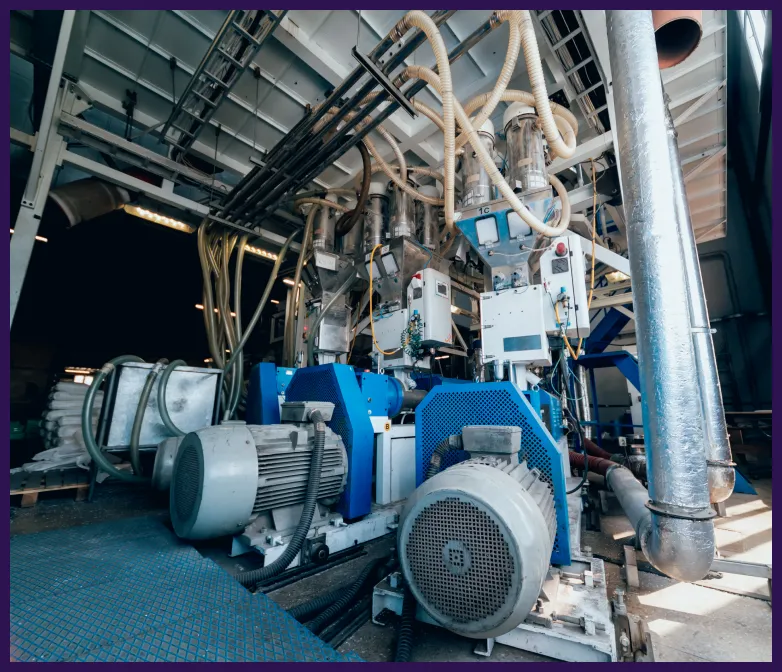
High-efficiency electric motors (IE3/IE4).
Variable Speed Drives (VSDs).
Efficient tea-processing equipment (dryers, withering fans, CTC machines).
High-efficiency industrial boilers (biomass, hybrid, electric).
Improved steam systems (insulation, condensate recovery, efficient burners).
Energy-efficient compressed air systems.
Waste-heat recovery solutions.
Solar thermal systems for industrial heat.
Industrial and commercial heat pumps.

Modern, efficient dryers (tea, grains, fish, fruits).
Solar-powered agro-processing equipment (mills, oil presses, hullers).
Solar or hybrid cold storage and refrigeration.
Energy-efficient cold rooms and climate-friendly refrigeration.
Solar water pumps for irrigation and livestock.
Efficient livestock and poultry equipment.
PUE equipment for aquaculture (aerators, pumps).
High-efficiency appliances (refrigerators, freezers, fans, lighting).
Efficient HVAC systems.
Smart meters and energy-monitoring devices.
Building efficiency solutions (LEDs, insulation, heat-control materials).
Solar PV systems for industrial/commercial self-generation.
Battery storage systems.
Hybrid renewable energy systems (solar + biomass + grid).
Energy Management Systems (EMS) and digital process monitoring.
IoT sensors for energy and equipment performance.
Repair and maintenance toolkits for appliances and solar systems.
Diagnostic tools for electrical and electronic equipment.
E-waste recycling and material-recovery technologies.

OTHER COUNTRIES
Explore country-specific opportunities, stakeholders, and clean-tech priorities.


OUR PARTNERS






Join the platform
Become part of a growing network of industries, clean-tech providers, energy experts, and financiers working together to accelerate energy-efficient and low-carbon industrial development across Africa.